
 English
 Русский
 Español
 Français
 Deutsch
 Italiano
 Português
Custom Turkey Tour
Custom Turkey Tour
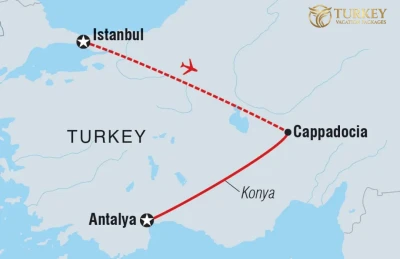

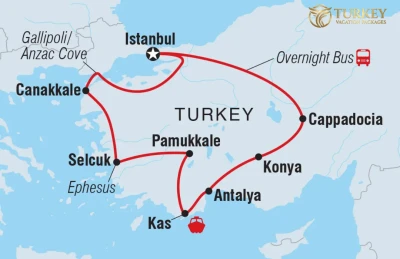
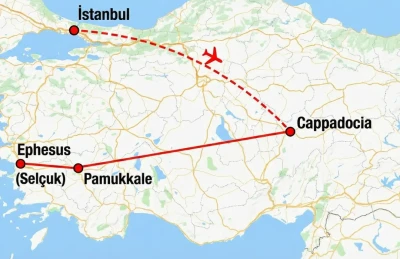
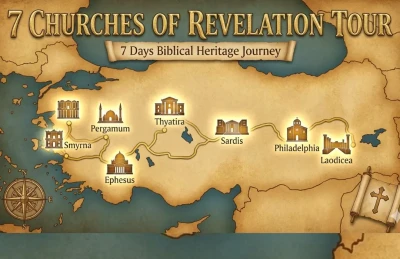
Tailor-made Turkey itinerary — personalized private tours across top destinations.
A custom Turkey tour means every element—destinations, duration, accommodation standards, activities, pacing, and daily schedules—is designed specifically around your preferences, interests, and travel style rather than following pre-packaged itineraries created for average tourists. Unlike standard group departures where you join fixed programs visiting predetermined sites on set dates, custom tours build entirely around YOU, creating personalized journeys that reflect your unique priorities.
The fundamental difference begins with destination selection: standard packages route everyone through the classic Istanbul-Cappadocia-Ephesus triangle regardless of individual interests, while custom tours might emphasize coastal regions if you're beach-oriented, focus on archaeological sites if ancient history fascinates you, or venture into lesser-known regions like the Black Sea or southeastern Turkey if you want authentic experiences beyond tourist circuits. You're choosing what matters to YOUR trip rather than accepting what tour operators decided matters to generic travelers.
Daily pacing transforms completely—standard tours maintain schedules optimized for group efficiency, cramming maximum sites into allocated time regardless of whether you're energized or exhausted. Custom tours adapt to your demonstrated energy and interests, allowing lingering at places that captivate you, skipping sites that don't align with your passions, and incorporating rest days or lighter schedules when you need recovery time rather than forcing marches through monuments when you're tired and cranky.
Accommodation choices expand enormously in custom arrangements. Standard packages default to specific hotel tiers (3-star budget, 4-star mid-range, 5-star luxury) with limited selection within each category. Custom tours let you specify exact properties matching your aesthetic preferences—perhaps boutique Ottoman mansions in Istanbul, authentic cave hotels in Cappadocia, coastal resorts with private beaches, mountain lodges in remote regions, or any combination reflecting your accommodation priorities. You might even mix levels strategically, splurging on signature properties in key destinations while staying more modestly elsewhere to balance overall budget.
Activity customization matters tremendously for travelers with specific interests. Standard tours include predetermined activities appealing to broad audiences—perhaps brief pottery demonstrations, standard museum visits, and efficient valley viewpoints. Custom tours curate experiences around YOUR passions: extended photography workshops with professional guidance if you're serious about capturing Turkey's beauty, comprehensive wine education across multiple vineyards if you're oenophile, intensive cooking classes learning regional cuisines if food drives your travel, extensive hiking and outdoor adventures if you're active traveler, or cultural immersion with local families if authentic human connections matter most.
The guide quality and continuity differs substantially—standard group tours often switch guides between regions (your Istanbul guide differs from your Cappadocia guide), and guides must address diverse group interests simultaneously rather than focusing on your specific curiosities. Custom tours can provide single expert guides accompanying you throughout Turkey (if they hold appropriate multi-region licensing), or carefully matched regional specialists who receive detailed briefings about your interests, ensuring continuity and personalization throughout your journey.
Transportation becomes private and flexible rather than shared and scheduled. Custom tours use comfortable vehicles dedicated to your party—sedans for couples, minivans for families, luxury vehicles if you prefer—allowing spontaneous stops when you spot interesting viewpoints, flexible timing without waiting for group stragglers, and mobile base where you store purchases and relax between sites rather than sharing crowded tour buses with strangers.
Custom Turkey tour pricing varies enormously based on duration, party size, accommodation choices, and included experiences, though understanding cost structures and value propositions helps you evaluate whether customization justifies the investment for your specific situation and travel priorities.
Standard package baseline for comparison: A quality 10-day standard Turkey tour covering Istanbul, Cappadocia, Pamukkale, and Ephesus with 4-star hotels, daily group tours, and select meals typically costs $1,800-2,500 per person. You're sharing experiences with 10-15 other travelers, following fixed itineraries, and maintaining predetermined schedules regardless of your energy or interests. These packages deliver solid value for budget-conscious travelers comfortable with group dynamics and limited flexibility.
Custom tour pricing reality: Equivalent 10-day custom tours with similar accommodation standards, private guiding, and comparable activity levels cost $2,800-4,500 per person for couples, decreasing to $2,200-3,500 per person for families of four as costs divide among more travelers. The $1,000-2,000 per person premium over standard packages buys: complete itinerary control designed around your interests, private guides providing personalized attention rather than addressing groups, flexible daily scheduling adapting to your energy and preferences, custom activity selection matching your passions, and elimination of group tour compromises and inefficiencies.
What drives custom tour costs higher: Private guiding throughout your trip means you're covering guide wages ($100-200 daily) exclusively rather than sharing with 15 group members, though the personalized attention and flexible expertise justify premiums for travelers valuing educational depth. Private vehicles and drivers dedicated to your party cost $80-150 daily versus shared bus costs dividing among groups. Custom itinerary planning requires operator time researching your specific requests, coordinating logistics, and designing optimal routing rather than following established programs. Accommodation flexibility sometimes means booking properties that don't offer wholesale group rates, paying closer to retail pricing.
Where custom tours deliver cost efficiency: Larger travel parties (4-8 people) achieve excellent per-person value as private guide and vehicle costs divide among more travelers—families of six might pay just $1,800-2,800 per person for comprehensive custom tours that couples pay $3,500-5,000 each to experience. Custom tours eliminate activities you don't want, allowing budget reallocation toward experiences you genuinely value rather than subsidizing group tour inclusions that don't interest you. The flexibility to adjust duration and destinations means you're not paying for standardized programs including sites you'd skip if given choice.
Budget-level custom tours exist: Not all customization means luxury pricing. Budget-conscious custom tours using comfortable 3-star hotels, hiring guides just for complex destinations (Istanbul, Cappadocia) while traveling independently in straightforward areas, and focusing on free/low-cost activities (hiking, markets, neighborhoods) can cost $1,200-1,800 per person for 10 days—competitive with standard group packages while maintaining significant personalization and flexibility. The key is being clear about budget parameters during planning so operators design within your financial reality rather than assuming custom equals luxury.
Mid-range custom tours represent sweet spot: Most travelers find $2,500-4,000 per person for 10-14 day custom Turkey tours delivers optimal balance—you're experiencing genuine personalization, staying in quality boutique hotels and authentic accommodations, receiving expert guiding in regions where it matters, maintaining flexibility throughout, yet costs remain comprehensible to middle-class travelers rather than requiring trust-fund budgets. This range provides 80-90% of luxury tour benefits at 50-60% of ultra-luxury pricing.
Luxury custom tours push boundaries: High-end custom experiences emphasizing Turkey's finest properties (Four Seasons Istanbul, Museum Hotel Cappadocia, exclusive coastal resorts), comprehensive private expert guiding throughout, gourmet dining at acclaimed restaurants, exclusive activities unavailable to standard tourists, and white-glove service coordination cost $6,000-12,000+ per person for 10-14 days. These suit affluent travelers accustomed to luxury tourism globally who want Turkey experiences matching their established standards, or travelers celebrating once-in-lifetime occasions where investment in perfection justifies premium costs.
How to evaluate custom tour value for YOUR situation: Calculate cost per day including all elements to compare fairly—that $4,000 custom tour over 12 days costs $335 daily while $2,000 standard package over 8 days costs $250 daily, narrowing the apparent gap. Consider your vacation time value—if you have limited annual leave, custom tour efficiency maximizing every hour through optimal scheduling and elimination of group tour waste might justify premiums. Factor in party size dramatically affecting per-person economics—custom tours for 4+ people often approach standard package pricing per person while delivering exponentially better experiences. Assess honestly whether flexibility, personalization, and private attention matter enough to YOU personally to justify 50-100% premiums over group alternatives, or whether solid standard packages satisfy your travel style perfectly well at better value.
Absolutely, and this combination represents one of custom touring's greatest advantages—you're not confined to either tourist-trail efficiency or adventurous exploration but can strategically blend both approaches, experiencing Turkey's iconic highlights that earned their fame while also discovering authentic lesser-known regions that reveal the country's genuine character beyond tourism performance.
The strategic blending approach: Custom tours might allocate 60-70% of time to must-see destinations delivering Turkey's signature experiences—Istanbul's layered history where Byzantine, Ottoman, and modern Turkey intersect, Cappadocia's otherworldly fairy chimneys and hot air balloon flights, Ephesus's remarkably preserved Roman ruins, Pamukkale's white travertine terraces—ensuring you experience what makes Turkey extraordinary and photographically spectacular. The remaining 30-40% ventures beyond standard circuits into authentic lesser-known areas where you'll interact with local life continuing largely unchanged by mass tourism, creating balanced itineraries that satisfy both bucket-list completion and genuine discovery.
Practical integration examples: Between Istanbul and Cappadocia, add overnight in Safranbolu (UNESCO-listed Ottoman town with preserved wooden mansions and authentic atmosphere just 3 hours from Ankara) breaking up the journey while adding cultural depth. After Cappadocia, route through Konya visiting Rumi's mausoleum and experiencing authentic Whirling Dervishes ceremonies in the Sufi tradition's spiritual home rather than tourist performances. Instead of just hitting Ephesus, explore surrounding villages like Şirince (charming hilltop village known for fruit wines and stone architecture) and lesser-known ancient sites like Priene or Aphrodisias that offer comparable archaeological significance without Ephesus's overwhelming crowds.
Regional deep-dives combining both: A western Turkey custom tour might thoroughly cover Istanbul (3-4 days) and standard Aegean coast highlights (Ephesus, Pamukkale), then venture into less-visited Aegean villages, explore Alaçatı's windsurfing culture and stone architecture, visit working olive oil farms and vineyards offering authentic agricultural tourism, and potentially reach Assos or Ayvalık—stunning coastal areas where Turkish families vacation but international tourists rarely visit. You're experiencing both worlds: the famous sites justifying your trip to Turkey, and the authentic discoveries creating unique stories you'll tell that differ from everyone else's Turkey experiences.
Eastern and southeastern additions: For travelers comfortable with adventurous travel and interested in going significantly off-trail, custom tours can incorporate southeastern regions like Şanlıurfa (biblical history including traditional birthplace of Abraham, authentic Islamic culture, minimal tourism infrastructure), Mardin (stunning hilltop city overlooking Mesopotamian plains with Syrian Orthodox monasteries and Arabic influences), or Mount Nemrut with its mysterious stone heads. These regions require more flexibility, tolerance for basic facilities in some areas, and cultural sensitivity in conservative environments, but reward travelers seeking destinations genuinely unexplored by typical tourism.
Black Sea integration: Turkey's least-touristed major region offers dramatic mountain scenery, Sumela Monastery clinging to cliff faces, tea plantations in lush highlands, traditional wooden houses, and authentic Black Sea culture distinct from western Turkey's tourism-adapted atmosphere. Custom tours might add 3-4 Black Sea days after covering standard western circuits, creating comprehensive Turkey experiences spanning multiple regions and cultural variations.
The time and pacing considerations: Successfully combining mainstream and off-path destinations requires realistic duration—attempting both in 7-8 days creates rushed exhausting schedules spending half your time in vehicles. Optimal integration needs 12-16 days minimum, allowing 8-10 days for must-see highlights plus 4-6 days exploring lesser-known regions at comfortable pace. Custom tour operators help you evaluate whether your available time realistically accommodates your destination wish list or whether you should save some locations for future Turkey trips rather than cramming everything into single journey.
Transportation logistics affect feasibility: Some off-path destinations involve long drives or limited flight access, requiring realistic assessment of whether travel time justifies the destination additions. For example, reaching Mount Nemrut from western Turkey requires either very long drive or flights with connections, potentially consuming 1-2 full days just on travel logistics. Quality custom tour operators honestly advise whether proposed off-path additions make sense given your total trip duration or whether the time investment exceeds the experience value for first-time visitors still seeing major highlights.
Who this approach suits: Travelers who've researched Turkey extensively and developed specific interests in particular regions or aspects of culture beyond generic tourism. Return visitors who covered mainstream destinations previously and now want deeper exploration. Travelers with 2+ weeks allowing sufficient time for both comprehensive and adventurous routing. Anyone who finds authentic cultural immersion and unique discoveries more satisfying than efficient tick-box tourism covering maximum famous sites. Families or groups wanting variety where different family members have different interests—perhaps parents fascinated by off-path cultural exploration while teenagers prefer standard tourism's creature comforts and WiFi reliability.
Custom tours offer substantial flexibility adapting to your evolving needs, energy levels, and serendipitous discoveries throughout your journey, though the degree of spontaneity possible depends on tour structure, advance planning specificity, and practical logistics that even custom arrangements cannot infinitely adjust. Understanding both possibilities and limitations helps set appropriate expectations about what "flexible" actually means in practice.
Pre-planned flexible custom tours: Most custom tours establish detailed itineraries before your arrival—specific hotels booked, guides scheduled for particular days, activities reserved, transportation coordinated—but build in substantial breathing room and decision points allowing adjustments. Perhaps your itinerary shows "Morning: Topkapı Palace visit, Afternoon: Free time for Grand Bazaar shopping OR Bosphorus cruise OR rest at hotel—decide based on energy." This structured flexibility provides framework ensuring essential elements happen while maintaining choices about optional activities based on how you're feeling in the moment.
Daily pacing remains adjustable within reason—if you're loving Topkapı Palace and want to stay longer, your private guide adjusts the afternoon schedule, perhaps shortening Grand Bazaar time or suggesting skipping a planned minor site. If you're exhausted from jet lag or previous days' touring, guides accommodate earlier returns to hotels or lighter schedules. If weather turns unexpectedly beautiful, outdoor activities can shift earlier in the day while indoor museums move to evening or following days. This real-time adjustment represents massive improvement over fixed group tours where schedules maintain regardless of participants' energy or interest.
Truly spontaneous unplanned custom tours: Some adventurous travelers prefer minimal advance structure, booking just accommodation and transportation while leaving daily activities completely open for in-the-moment decisions based on weather, energy, local recommendations, and serendipitous discoveries. This works best for experienced travelers comfortable with uncertainty, those with substantial Turkey time allowing relaxed pacing without pressure to efficiently cover maximum sites, and personalities who thrive on spontaneity rather than finding it stressful. However, this approach risks discovering popular activities or restaurants are fully booked, arriving at sites during worst crowd times, or missing time-sensitive experiences that advance planning would have captured.
Practical limits on spontaneous changes: Accommodation cannot change day-of without losing prepayments and potentially finding nothing available in popular destinations during peak season—you cannot spontaneously decide "let's stay Cappadocia extra night" if Cave Hotels are fully booked. Guides schedule multiple clients across days and cannot always extend with you if you spontaneously want additional days, particularly during high season when quality guides book solid. Popular activities like hot air balloon flights, quality restaurant reservations, or special experiences (cooking classes, specialized workshops) require advance booking and cannot be added last-minute during peak periods.
Transportation between cities involves tickets, reservations, or pre-arranged transfers that cannot infinitely adjust—domestic flights have specific times, intercity buses follow schedules, and private drivers coordinate around your itinerary. Major spontaneous routing changes (deciding mid-trip to add entirely new destinations not in original planning) create logistics complexity potentially requiring days to coordinate, missing the "spontaneous" timing that inspired the change.
The communication and coordination factor: Successful flexibility requires excellent communication with your tour coordinator—operators who provide 24/7 contact via WhatsApp or phone allowing real-time discussions about adjustments. Quality operators assign dedicated coordinators familiar with your specific itinerary who can quickly evaluate whether proposed changes work logistically and financially. This responsive coordination transforms flexibility from theoretical possibility into practical reality, as coordinators rapidly research alternatives, communicate with guides and drivers, and confirm adjusted arrangements.
Financial implications of mid-trip changes: Some adjustments cost nothing—changing activity sequence within a day, adjusting timing, or swapping optional activities of similar cost. However, significant changes can incur fees: canceling pre-booked experiences might mean losing deposits, adding guides for unplanned days costs guide's daily rate plus potentially premium pricing for short-notice availability, extending stays requires negotiating accommodation additions potentially at higher last-minute rates, and adding destinations involves transportation costs not budgeted in original pricing.
Quality custom tour operators establish clear policies about change costs before your trip—perhaps minor adjustments within established itinerary frameworks are complimentary, moderate changes cost flat fees ($50-100 for coordination and rebooking), and major restructuring bills hourly coordination time plus all incremental costs. Understanding these terms before departure prevents unpleasant surprise charges when you request adjustments.
The personality and travel style factor: Assess honestly whether you genuinely value flexibility or just theoretically appreciate it. Some travelers discover that despite wanting flexibility, the reality of constantly making decisions becomes exhausting rather than liberating, and they'd prefer operators handling most choices leaving them to just experience rather than continuously coordinate. Others find that pre-planned structure, even if theoretically adjustable, creates enough framework that truly spontaneous changes rarely appeal in practice. True flexibility-lovers who regularly adjust plans based on mood, weather, and discoveries should explicitly discuss this preference during planning, ensuring operators structure tours with maximum built-in flexibility rather than detailed minute-by-minute schedules requiring coordination to modify.
Custom tours excel at adapting to virtually any party configuration—from solo travelers to extended families, couples to friend groups, multigenerational families to corporate retreats—though group size and composition significantly affect costs, logistics, vehicle requirements, and optimal itinerary design. Understanding how your specific party characteristics influence custom tour structure helps create arrangements that genuinely work rather than forcing inappropriate configurations.
Couples (2 people) represent the most common custom tour clients. You'll enjoy maximum intimacy and undivided guide attention, easiest decision-making without committee discussions, and vehicles allowing access to narrow historic streets. However, you're bearing full guide and vehicle costs—that $400 daily private touring expense means $200 per person rather than dividing among family members. Custom tours for couples work excellently for honeymooners wanting romantic personalized experiences, anniversary travelers celebrating milestones, or anyone prioritizing intimate travel where you're each other's sole company throughout the journey. Budget-conscious couples might consider joining small group tours for portions of their Turkey trip while booking custom experiences just for highest-priority destinations or activities.
Small families (3-4 people) hit the value sweet spot. Per-person costs decrease 40-50% compared to couples as guide and vehicle expenses divide among more people—that $400 daily cost becomes just $100-130 per person for family of three or $100 per person for family of four, approaching group tour pricing while maintaining complete customization. Families benefit tremendously from custom tours' flexibility accommodating children's energy levels, attention spans, and interests—perhaps shorter morning touring sessions with afternoon pool time, simplified historical explanations appropriate for young ages, strategic snack breaks preventing hunger meltdowns, and activity mix balancing cultural education with fun experiences kids actually enjoy.
Parents appreciate the ability to adjust daily plans based on how children are handling travel—if kids are exhausted or cranky, guides understand and accommodate lighter schedules without group tour pressure to keep pace regardless of family needs. Teenage children often engage more deeply with private guides who address them directly and answer their specific questions rather than group tours where teenagers zone out during generic commentary directed at adults.
Larger families and extended families (5-8 people) achieve excellent per-person economics—potentially $70-100 per person for comprehensive daily private touring—while creating family bonding experiences impossible in separate hotel rooms or dispersed among group tours. However, logistics complexity increases with larger parties: you'll need minibuses rather than standard vans, restaurant reservations require advance coordination for groups, and ensuring everyone's voices are heard in daily planning requires conscious effort preventing dominant personalities from controlling all decisions.
Multigenerational families (grandparents, parents, children) must carefully consider varying mobility levels, energy, and interests. Custom tours' flexibility helps by allowing groups to split temporarily—perhaps grandparents rest at hotel or visit nearby café while parents and children hike valleys, then everyone reunites for meals and less strenuous activities. Quality guides manage these dynamics diplomatically, ensuring nobody feels left behind while accommodating realistic limitations.
Friend groups (4-10 people) traveling together enjoy cost sharing and built-in companionship throughout Turkey exploration. However, groups must navigate decision-making about destinations, activity choices, spending levels, and daily pacing where individual preferences inevitably diverge. Successful friend group tours require honest advance communication about budgets (ensuring everyone comfortably affords the planned experience level), interests (acknowledging some compromise when preferences differ), and trip philosophy (efficient site coverage versus relaxed pacing, tourist-trail focus versus adventurous exploration).
Solo travelers booking custom tours face challenging economics since you're covering full private guide and vehicle costs alone—potentially $300-500 daily for comprehensive touring. This investment makes sense if you have generous travel budgets where cost isn't primary concern, if you value personalized attention and complete itinerary control enough to justify premiums, or if you're traveling for professional purposes (perhaps travel writers, photographers, researchers) where custom expertise directly supports work product. Budget-conscious solos should consider hybrid approaches: joining small group tours for portions of Turkey (Istanbul, Cappadocia) while booking custom experiences only for specific activities or destinations where private arrangements deliver proportionally high value, or traveling during shoulder/off-season when some operators offer reduced solo rates.
Corporate and incentive groups booking custom tours for team-building, client entertainment, or employee rewards typically range 10-30 people. These require specialized operators experienced with business travel logistics, formal billing and contracting, and understanding corporate priorities (impressing clients, team cohesion, efficient scheduling around work obligations). Costs increase with group size but corporate budgets typically accommodate quality experiences as business investments rather than personal vacation expenses.
Special interest groups (photography clubs, history societies, wine enthusiasts, outdoor adventure clubs) booking custom tours around shared passions achieve dual benefits: cost sharing among 8-15 participants and curated itineraries emphasizing group's specific interests rather than general tourism. These work excellently when groups naturally share similar budgets, travel styles, and interest depths, but require strong trip leadership managing group dynamics and decision-making throughout the journey.
Absolutely, and strategic accommodation mixing represents one of custom touring's smartest value optimization strategies—you're not locked into uniform hotel categories throughout your trip but can invest in signature properties where accommodation significantly enhances destination experiences while economizing at locations where hotels serve primarily as comfortable places to sleep between touring activities.
The strategic splurge approach: Many travelers allocate their accommodation budget unevenly, splurging on iconic properties in key destinations where the hotel itself becomes part of the experience while staying more modestly elsewhere. For example: choosing Museum Hotel or Argos in Cappadocia ($300-600 per night) where cave architecture and balloon-watching terraces make accommodation integral to destination magic, but selecting comfortable mid-range hotels in Pamukkale ($80-120 per night) where you're primarily there to see travertine terraces and won't spend significant time at the property. This approach delivers memorable luxury moments in places that justify premium investment while maintaining overall budget reasonability through selective rather than comprehensive luxury.
Istanbul might warrant boutique properties in Sultanahmet or stylish hotels in Beyoğlu ($150-250 per night) where location and character matter tremendously—you're stepping directly into neighborhoods you want to explore, staying in architecturally interesting buildings, and experiencing urban Istanbul atmosphere. Conversely, a beach resort stopover might justify beachfront luxury ($200-400 per night) where pool, private beach access, and resort amenities define the experience, while overnight stops breaking long drives need only comfortable highway hotels ($60-90 per night) offering clean beds and hot showers without location or character considerations.
Budget optimization through mixing: Travelers with fixed total budgets can extend trip duration or upgrade key experiences by mixing accommodation levels strategically. Perhaps you have $2,000 per person accommodation budget for 12 nights—staying uniformly at $165/night mid-range hotels throughout, OR strategically mixing: 3 nights luxury cave hotel Cappadocia ($400/night = $1,200), 2 nights boutique Istanbul ($200/night = $400), and 7 nights comfortable 3-star properties elsewhere ($55/night = $385) totaling $1,985 and delivering far more memorable experiences through strategic investment in properties that matter most while economizing where hotel choice minimally impacts overall trip quality.
Accommodation type variety adds richness: Beyond just price mixing, varying accommodation styles creates more textured travel memories. Perhaps combining: authentic cave hotels in Cappadocia providing unique architectural experiences, restored Ottoman mansions in Safranbolu or Istanbul offering historical immersion, modern beach resorts along the Mediterranean delivering contemporary comfort and amenities, mountain lodges or village guesthouses in remote regions providing rustic authentic atmosphere, and business-class urban hotels in major cities offering efficiency and comfort when you need productive work space or reliable infrastructure.
This variety means you're experiencing Turkey's accommodation diversity rather than staying in cookie-cutter hotels that could be anywhere. The cave hotel night where you sleep in room carved from volcanic rock feels dramatically different from the Ottoman mansion night in restored 19th-century architecture, which differs entirely from the modern beach resort experience—these accommodation changes become part of your journey's narrative rather than just logistics.
Practical coordination considerations: While you can theoretically mix any accommodation combinations imaginable, some practical factors influence feasibility. Rapidly changing between extreme luxury and budget creates jarring transitions that some travelers find psychologically uncomfortable—going from Four Seasons suite to basic budget hotel next night can feel disappointing even if the budget hotel would have satisfied perfectly in isolation. More gradual transitions (luxury to mid-range to budget rather than luxury directly to budget) or clustering price levels by region (luxury Istanbul and Cappadocia, mid-range coast, budget in smaller towns) creates more cohesive experiences.
Operators coordinating mixed-level accommodations must research properties across all price categories rather than working exclusively with luxury partners or budget networks they know well. This potentially increases planning time and coordination complexity, though experienced operators handle this routinely. Some operators specialize in specific accommodation tiers and may be less effective when asked to mix widely across their comfort zones—if you want significant mixing, choose operators demonstrating experience with full accommodation spectrum rather than exclusively luxury or budget specialists.
Communication importance with tour operators: Clearly articulate your mixing strategy during planning rather than assuming operators will intuitively understand your approach. Explain where you want to invest in special properties and why (perhaps you've always dreamed of staying in Museum Hotel Cappadocia, or beachfront location matters tremendously for your family), where you're comfortable economizing (overnight stops, destinations where you'll tour extensively and barely use hotel facilities), and any specific properties you've researched and want included. This guidance helps operators design arrangements aligned with your actual priorities rather than defaulting to uniform mid-range properties failing to deliver the memorable moments you'd willingly pay extra to experience.
Special interest accommodation mixing: Families might want child-friendly resort properties with pools and kids' clubs in some destinations (keeping children happily occupied) while choosing adult-focused boutiques in cities where children will tour alongside parents. Couples might mix romantic boutiques perfect for anniversaries with practical comfortable hotels where romance matters less than efficient location and rest quality. Business travelers mixing work and vacation might need business-class hotels with reliable wifi and work spaces in some cities while wanting leisure resorts in others. Custom tours accommodate these nuanced requirements impossible in standard packages defaulting to one accommodation category throughout.
Understanding standard inclusions and common exclusions in custom tour pricing helps you budget accurately, avoid surprise mid-trip expenses, and fairly compare operator quotes rather than selecting the lowest advertised price without comprehending what's actually covered versus what you'll pay additionally throughout your journey.
Standard inclusions in most custom tour packages: All accommodation for nights specified in itinerary at agreed quality standards, daily breakfast (typically included with hotel rooms), private professional licensed guides in destinations where guiding is planned (Istanbul, Cappadocia, Ephesus, other cultural/historical areas), private vehicles and drivers throughout toured portions of your trip, all fuel and parking fees, internal domestic flights if your itinerary requires flying between regions, ground transportation between destinations (intercity drives or flights as appropriate), airport transfers at trip beginning and end, entrance fees to major sites included in itinerary, and comprehensive pre-trip planning and itinerary design.
What's typically excluded from base custom tour pricing: International flights to/from Turkey (you book these separately though some operators can assist with arrangements if requested), travel insurance (essential and should be purchased independently covering trip cancellation, medical emergencies, and interruption), most meals beyond included breakfasts (lunches and dinners remain your expense unless specifically included in particular packages), alcoholic beverages even when meals are included unless explicitly stated otherwise, optional activities beyond core itinerary (hot air balloon flights, Turkish bath experiences, specialized workshops, boat cruises), personal expenses (souvenirs, snacks, laundry, minibar, extra drinks), tips for guides and drivers (customary in Turkey, budget 10-15% of tour cost or $10-20 per person daily for guides, $5-10 for drivers), and visa fees if applicable to your nationality though most Western visitors receive free entry.
The meal inclusion confusion: This represents one of the most common sources of pricing misunderstanding. Budget and many mid-range custom tours include only breakfast (provided with hotel accommodations) while excluding lunch and dinner, expecting you to dine independently with guide recommendations. This keeps base tour prices competitive but requires budgeting $30-60 per person daily for meals throughout your trip—that $3,000 custom tour for 10 days actually requires $3,300-3,600 when you factor meal costs.
Premium and luxury custom tours more commonly include half-pension (breakfast and dinner) or full-pension (all meals), building these costs into upfront pricing. While these tours appear more expensive initially, the cost difference often proves minimal when you add excluded meal expenses to budget tours. A $3,000 tour excluding meals versus $3,800 tour including dinners represents just $800 difference, but you'll spend $400-600 on those dinners anyway—meaning the higher-priced package costs just $200-400 more net while eliminating constant restaurant research and payment transactions throughout your trip.
Hot air balloon flight clarification: Cappadocia balloon flights represent significant expense ($180-250 per person standard flights, $300-400 for small-group flights, $600-1,200 per person for exclusive private baskets) and many travelers assume comprehensive Turkey tours include this signature experience. However, most custom tours list balloon flights as optional extras requiring separate payment unless explicitly stated as included. Always clarify: "Is the Cappadocia balloon flight included in your quoted price or will we pay that separately?" Get written confirmation preventing mid-trip surprise when you're asked to pay $200-250 you assumed was included.
Entrance fee inclusion varies: Some operators include all entrance fees to sites in their itineraries, rolling these costs into tour pricing. Others exclude most entrance fees expecting you to pay at each site (approximately $5-15 per major attraction, accumulating to $40-80 per person over 10-12 days visiting multiple museums and monuments). The inclusion approach simplifies budgeting and eliminates constant small payment transactions, while exclusion approach keeps tour base prices lower but requires you to carry cash and pay repeatedly throughout touring days. Neither approach is inherently better—they're different pricing philosophies—but you must understand which you're receiving to compare quotes accurately.
Single traveler supplements: Pricing almost always assumes double occupancy (two people sharing rooms), meaning quoted per-person rates reflect cost splitting between travelers. Solo travelers typically pay 40-80% above the per-person twin-share rate to cover single room occupancy—hotels charge near-full rate for rooms used by one person rather than two paying guests. A custom tour quoted at $3,500 per person might cost solo travelers $5,000-6,300 rather than $3,500, dramatically affecting budget planning. Some operators offer slightly reduced solo supplements (30-50% rather than full 40-80%) making solo custom touring more accessible, and should be asked about during initial inquiries if you're traveling alone.
How to obtain complete transparent pricing: Request itemized quotes showing accommodation costs, guiding fees, vehicle and driver expenses, activity costs, meal inclusions, flights, and any other components rather than just single total figure. Ask explicitly: "What is included in this price and what additional expenses should we budget for during the trip?" Quality operators provide detailed breakdowns and realistic budgeting guidance for excluded expenses rather than lowballing quotes then surprising you mid-trip with costs they didn't mention upfront. Compare multiple operator quotes using identical assumptions about inclusions/exclusions rather than just comparing bottom-line numbers that might reflect entirely different coverage.
Custom tour booking timelines vary significantly based on season, complexity, flexibility preferences, and whether you're coordinating special experiences requiring advance arrangements. Understanding optimal planning windows helps secure quality guides, preferred accommodations, and desired experiences while maintaining reasonable flexibility without unnecessary advance commitment limiting spontaneity or risking deposits if plans change.
Standard custom tours during peak season (April-October) ideally book 8-12 weeks in advance. This timeframe allows tour operators to: research and design thoughtful customized itineraries addressing your specific interests rather than rushing generic proposals, secure quality licensed guides with availability matching your dates and expertise aligning with your trip focus, book preferred accommodations at properties you've specifically requested or that operators recommend for your interests (boutique cave hotels in Cappadocia, Ottoman mansions in Istanbul, coastal resorts with your desired characteristics), coordinate any special activities requiring reservations (hot air balloon flights, quality restaurant reservations, cooking classes, specialized workshops), and arrange all ground transportation logistics (domestic flights, private transfers, vehicle rentals) at optimal times and prices.
The 8-12 week window represents the sweet spot—sufficient lead time for comprehensive planning and securing quality resources, yet not so far ahead that you're committing before your overall travel plans solidify or risking that circumstances change requiring cancellations or modifications with financial penalties. Operators also offer better attention during this timeframe since they're not overwhelmed by imminent trip crisis management, allowing thoughtful planning rather than rushed coordination.
Last-minute custom tour bookings (2-4 weeks before) remain possible but significantly limit your options and likely compromise on optimal guides, accommodations, and experiences. You'll work with whichever guides have availability rather than selecting from operators' top professionals, accept remaining hotel rooms rather than preferred properties or categories, and potentially miss time-sensitive experiences like balloon flights that book solid weeks ahead during peak season. Some travelers intentionally book last-minute accepting these trade-offs in exchange for spontaneity and potentially negotiating better rates (operators sometimes discount rather than leaving capacity unsold), but most find the compromises outweigh advantages.
Off-season and shoulder season booking (November-March for off-season, April-May and September-October for shoulder) allows shorter planning windows—6-8 weeks often suffices during slower periods when guide availability exceeds demand, hotels have greater vacancy, and operators welcome business during quieter months. However, don't assume everything remains available at short notice even during low season—quality guides still maintain schedules, top properties sometimes close entirely during winter or limit operations, and certain activities (balloon flights particularly) face higher weather cancellation rates requiring flexible backup planning.
Complex highly customized itineraries require longer planning: If your custom tour involves elaborate requests beyond standard destination coverage—visiting remote regions with limited tourism infrastructure, arranging meetings with local artisans or cultural figures, coordinating specialized activities (archaeological site access requiring permissions, participation in traditional ceremonies, intensive workshops with masters of specific crafts), routing through multiple lesser-known destinations requiring extensive research, or any other elements that cannot be arranged through operators' established partner networks—plan minimum 12-16 weeks ahead and potentially longer for particularly complex arrangements.
These elaborate customizations require operators to research unfamiliar contacts, negotiate arrangements with people and organizations they haven't worked with previously, obtain necessary permissions from authorities, and coordinate multiple moving parts rather than following established programs. The time investment justifies the amazing unique experiences delivered, but cannot be rushed without compromising quality or feasibility.
The booking sequence strategy: Most experienced travelers book incrementally rather than committing everything immediately. First, contact operators 10-14 weeks before desired travel dates requesting preliminary itinerary proposals and approximate pricing based on your expressed interests and requirements. Review proposals, ask questions, request modifications, and evaluate whether operators understand your needs and respond thoughtfully. Once you've selected your preferred operator and refined itinerary to satisfaction, commit with deposit (typically 25-40% of total tour cost) securing your dates, guides, and initial hotel bookings. Final payment usually occurs 30-60 days before departure after all arrangements finalize.
This staged approach lets you maintain flexibility during initial planning while progressively committing as clarity increases. You're not immediately paying full tour costs before confirming the itinerary truly matches your vision, yet you're also not indefinitely delaying commitment leaving operators unable to secure resources on your behalf.
Cancellation policy considerations: Booking far in advance (12-16 weeks) involves greater risk of plan changes due to work obligations, family situations, health issues, or realizing timing doesn't work as envisioned. Before committing with non-refundable deposits, understand cancellation terms clearly: What refund percentages apply at various timeframes? (Often 100% refund for cancellations 90+ days out, 50-75% refunds 60-89 days out, 25-50% refunds 30-59 days out, no refunds within 30 days though exact terms vary by operator). What happens if operators must cancel versus you canceling? What constitutes valid force majeure (weather, natural disasters, political instability) versus optional cancellation?
Travel insurance becomes increasingly essential with substantial advance bookings and non-refundable deposits, protecting investments if you cannot travel for covered reasons (illness, family emergency, unexpected events beyond your control). Quality travel insurance costs 4-8% of trip value but provides peace of mind particularly for expensive custom tours booked months ahead where cancellation would mean losing thousands of dollars in deposits and payments.
Selecting quality custom tour operators versus questionable alternatives dramatically impacts your Turkey experience—the difference between seamless well-coordinated journeys with expert guides and frustrating experiences with communication breakdowns, substandard services, or even outright scams. Understanding evaluation criteria helps identify reputable professional operators worthy of your trust and investment.
Official licensing and business registration: Legitimate Turkish tour operators hold proper licensing from the Ministry of Culture and Tourism (TURSAB certification indicates official recognition and bonding). Verify operators maintain physical offices in Turkey with actual addresses (Istanbul, Ankara, or other major cities) rather than operating purely online from unclear locations with just website and email contact. Check business registration details—registered company names, tax identification, official contact information—demonstrating legal business operations rather than informal individual operations evading regulation and taxation.
Request TURSAB registration numbers and verify these through official channels if you're suspicious or considering significant financial commitment. While not all excellent small operators maintain elaborate corporate structures, complete absence of verifiable business legitimacy raises major red flags particularly when you're prepaying thousands of dollars months before services deliver.
Substantial online presence and reputation: Search operators on TripAdvisor, Google Reviews, and Turkey-specific travel forums, looking for substantial review volume (ideally 50+ reviews minimum) rather than just handful of potentially fabricated testimonials. Read reviews critically—consistent patterns matter more than any single glowing or damning assessment. Look for reviews specifically mentioning custom tour coordination, responsiveness to issues, guide quality, and whether delivered services matched what was promised rather than generic "nice tour" comments.
Pay attention to how operators respond to negative reviews—professional constructive responses acknowledging issues and explaining resolution attempts suggest legitimate businesses managing customer satisfaction, while defensive angry responses or silence indicates potential problems. Operators with years of consistent positive feedback across multiple platforms demonstrate track records worthy of trust, while those with sparse recent reviews or suspicious patterns (all reviews from same month, generic overly positive language, no specific details) warrant skepticism.
Communication quality and responsiveness: Initial inquiry responses reveal tremendous information about operator professionalism. Quality operators respond within 24-48 hours with personalized thoughtful replies addressing your specific questions and requirements rather than generic copy-paste marketing messages. They ask clarifying questions demonstrating genuine interest in understanding your needs—trip timing, interests, budget parameters, travel style, party composition, physical capabilities, accommodation preferences—rather than immediately pushing standardized package sales.
Multiple communication rounds during planning should show patience and flexibility as you refine requirements, with operators offering alternatives and modifications rather than rigid "take it or leave it" approaches. Operators rushing you toward immediate commitment, pressuring with artificial time limits ("special price only if you book today"), or becoming evasive when you ask detailed questions about specific services raise concerns warranting caution or declining their services entirely.
Transparent pricing and contracting: Reputable operators provide itemized quotes showing what's included versus excluded, breaking down accommodation costs, guiding fees, transportation, activities, and any other components rather than vague all-inclusive prices leaving you guessing what you're actually paying for. They clearly explain payment terms—deposit amounts and timing, final payment deadlines, accepted payment methods, refund policies—in writing through formal contracts or detailed emails creating documentation should disputes arise.
Be cautious of operators demanding full payment far in advance (3+ months before travel) or insisting on untraceable payment methods (wire transfers to personal accounts, cryptocurrency, cash). While deposits are completely normal (typically 25-40% of tour cost upon booking), responsible operators don't need full payment months early unless they're financially unstable or planning to disappear with deposits. Standard practice involves deposits securing your booking then final payments 30-60 days before travel, with clear documentation of what was paid and what's owed.
Guide quality and credentials: Ask operators about guides who'll lead your tours—What are their qualifications and licensing? Do they hold university degrees in relevant fields (archaeology, history, tourism)? How many years of experience do they have? What languages do they speak fluently? Can you see brief profiles or previous client feedback about specific guides? Quality operators happily share this information and often maintain guide profiles on their websites, while questionable operators remain vague about who'll actually guide you, suggesting they're using unlicensed guides or assigning whoever's cheapest rather than matching guides to your interests.
References and direct communication: Don't hesitate to request references from previous clients with similar custom tour requirements (similar destinations, party size, interests, timeframe). Reputable operators willingly provide contact information for past clients who've consented to serving as references, and these conversations reveal honest insights about operator performance, problem-solving when issues arose, and whether experiences matched promises.
Some travelers go further, asking to communicate directly with guides who'll lead their tours before committing. While not all operators accommodate this (guides are busy working), willingness to facilitate such contact demonstrates confidence in guide quality and transparency about who you'll actually spend your Turkey days with.