
 English
 Русский
 Español
 Français
 Deutsch
 Italiano
 Português
Is Public Transport Good in Turkey?

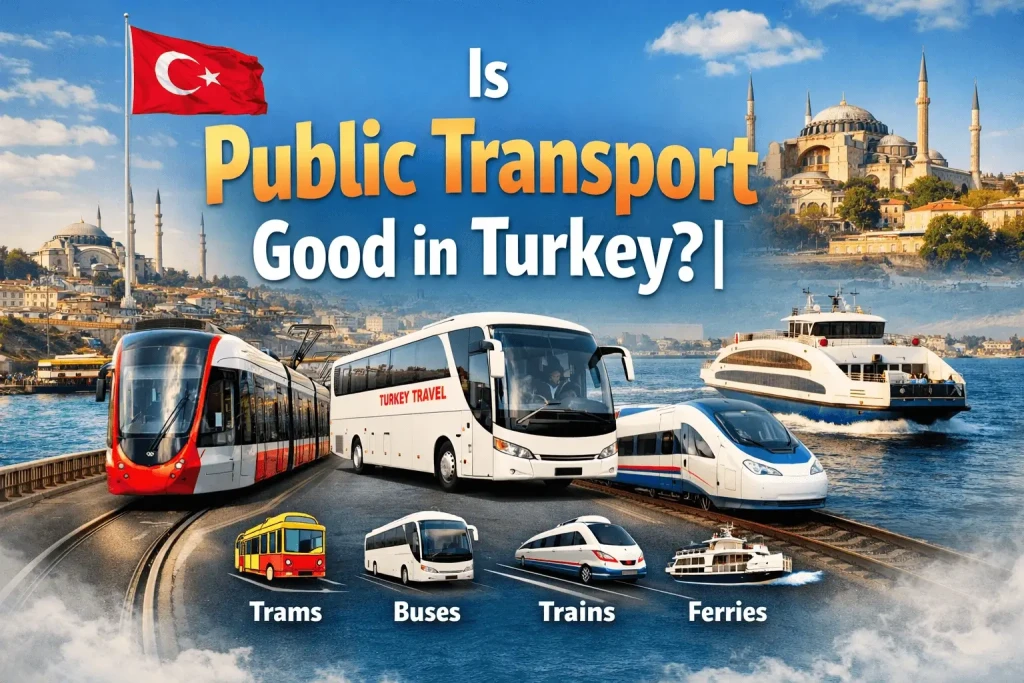
Is Public Transport Good in Turkey? A 2026 Complete Guide for Tourists
Public transport in Turkey is up to date, cheap, secure and very tourist-friendly. It’s one of the top modes of getting around cities, including Istanbul, Ankara, Izmir, and Antalya as well as stunning regions such as Cappadocia or Pamukkale.
Thanks to an extensive metro, tram, ferry boat, bus and high-speed train network operated by entities including İstanbul Buyukşehir Belediyesi (IBB), TCDD Taşımacılık and EGO you can live like a local for your trip without needing to rent a car or pay for expensive taxi rides.
Fully updated for 2026, this guide includes the newest fares, cards, apps and safety info —
plus step-by-step tips so you’ll know exactly where to go.
The Public Transport System in Turkey is Great for Tourists
Turkey made extensive infrastructure investments, with:
Comprehensive coverage
Large cities combine metro, tram, and bus, ferry; smaller towns interconnect through dependable regional buses and dolmuş (shared minibuses).
A full range of cheap prices
In Istanbul, most single rides Goa for ₺35–42 (~$1–1.20 USD); on many routes intercity options beat flying
Eco-friendly and comfy
Newer electric metros, trams and air-conditioned buses produce less pollution, while long-distance services often offer Wi-Fi, power points and clean interiors.
Tourist-friendly design
You’ll find English signs in major destinations; ferries offer gorgeous views of the Bosphorus; YHT trains zip between cultural centers.
Ease of access to attractions
Stops are close to sites such as Hagia Sophia, the Mevlana Museum in Konya or Ephesus near Izmir.
Public transport is also a safe and immersive way to experience everyday Turkish life.
Frequently Asked Questions about Turkey’s Public Transport
And in 2026, what is the public transport price in Turkey?
Istanbul: Istanbulkart per ride ≈ ₺42 (full fare); transfers discounted. Ferries ≈ ₺44–50 (for popular Bosphorus routes)
Izmir: İzmirim Kart naiz (ridemore is free within 90 minutes).
Ankara: AnkaraKart rides ≈ ₺26.
Intercity buses: ₺200-800+ depending on distance; YHT high-speed trains (Istanbul–Ankara) ≈ ₺780 economy
.
Prices change with inflation
always replenish cards or check apps.
Are tourists safe using public transport in Turkey?
Yes, especially in major cities. Cars are clean and well-maintained (even though they drive every day). Solo female travelers say they feel safe; pickpocketing is uncommon, but employ typical big-city vigilance. You can take overnight buses from good companies (for example: Pamukkale Turizm, Metro Turizm, Kamil Koç); the buses are comfortable and safe.
Local rides typically run 15–25 TRY; high-speed train fares vary by route.
How safe is public transport for solo travelers?
Yes, Turkey’s transport network is exactly well-regulated and monitored, even in the wee hours of the morning.
Use one card in multiple cities?
No, this is for tickets – cards like Istanbulkart and Ankarakart work on a city-by-city basis but are similar to use.
What is Top public transport in Istanbul for tourists?
Metro and tram are fastest for sightseeing, but ferries provide picture perfect views of the Bosphorus.
How To Use Public Transport in Turkey: Payment Methods
It makes sense to use city transport cards such as Istanbulkart or Ankarakart, which can be used on the metro, tram, bus and ferry.
Does Istanbulkart have a mobile application?
Yes. The Istanbulkart Mobile (iOs & Android) app allows you to get a top up, check balance, and find nearby reload points.
Are Turkish certificated metros and trams suitable for disabled tourists?
Yes. Most metros and trams include elevators, ramps and priority seating.
How do reliable are its buses and trains?
They are generally reliable and frequent, especially in larger cities and along high-speed rail routes.
How is dolmuş any different to regular buses?
Dolmuş are shared minibuses that stop at random, while regular buses run specific routes on set schedules.
Are tourists able to purchase transport cards at the airport?
Yes. Transport cards can be purchased at kiosks or vending machines in most major airports, including Istanbul Airport.
Can you pay for public transport in Turkey with a credit card?
Generally not on buses and trams — use a transport card — but ferries and train stations often accept cards.
Are there night ferries in Istanbul?
Some of the main ferry lines run until late night, although schedules change with the seasons.
The public transport in Turkey is safe for women travelers.
Yes. Public transport is claimed to be safe, with good lighting, CCTV, and staff present on a regular basis.
How do you take public transport from the airport to downtown?
Airport metros, HAVABUS shuttles or links using public buses that run directly to central stops.
How good are the metro systems in Turkish cities?
The most extensive and sophisticated metro networks belong to Istanbul, Ankara, Izmir and Bursa.
Cappadocia or Pamukkale public transport?
Yes. Long-distance buses and trains link these regions with Ankara, Izmir and Istanbul.
How far does public transport run in Turkey from the early morning to late night?
Service is generally 6 AM to midnight; some metro and ferry lines extend later on the weekend.
Is it allowed to have pets on public transport in Turkey?
Small pets in carriers are generally allowed, though specific city rules vary, so check before you travel.
Which public transport is the best for tourists in Turkey?
→ Ferries + metro/tram (beautiful & fast).
Between the cities → YHT high-speed trains, luxury buses.
Short hops → Dolmuş for flexibility.
Public Transport Services in Turkey: Take a Look at the Best 7
Metro & Trams —
Istanbul (M1–M9 lines, T1 tram to Sultanahmet), Ankara (M1–M4 + Ankaray light rail), Izmir (metro + trammed), Antalya. Fast, air-conditioned, and English-friendly.
Buses & Dolmuş —
City buses go everywhere; dolmuş are shared minibuses (wave to stop, say “inecek var” to get off). Cash or card accepted.
Ferries & Sea Buses —
Istanbul’s Şehir Hatları and IDO ferries take less than 30 minutes to cross the Bosphorus—don’t skip this iconic ride.
High-Speed Trains (YHT) —
Run by TCDD: Istanbul–Ankara (4h15m, several daily), Istanbul–Konya (4h40m), Ankara–Sivas. The train is modern, comfortable, with Wi-Fi and cheaper than flying on many routes. Book at ebilet. tcddtasimacilik. gov.tr.
Regional & Long-Distance Buses — Newer fleets that offer snacks, toilets, and reclining seats. Book via Obilet. com or company apps.
Best Tips about Using Public Transport in Turkey
Buy the right card on site — Istanbulkart (≈ ₺165 purchase, no credit included; anonymous version shareable by 5 people max.) Recharges are accepted at machines, kiosks or the Istanbulkart app. Other cities have equivalent cards.
Get these apps —
Google Maps or Moovit for real-time routes/timetables; Obilet for intercity buses; TCDD app for trains.
Try not to go when it is around peak hours —
8–10 AM and 5–7 PM are the most crowded.
Luggage & accessibility —
Most subways have elevators; intercity buses provide storage. Overnight buses are great value.
Pick up some words —
“Bilet nerede?” (Where is the ticket?), “Durak nerede?” (Where is the stop?), “İnecek var” (There’s a stop).
Airport transfers —
Avoid cabs; take Havaist or metro extensions (like the M11 in Istanbul)
English support —
In most tourist areas, staff will assist.
Pro tip: A single Istanbulkart can be used by several people (tap in order) —
ideal for couples or families
.
Why Tourists Love It
Taking public transport isn’t just sensible —
It’s part of the adventure. You’ll socialize with friendly locals on a dolmuş, drink tea on a Bosphorus ferry or see Anatolian landscapes whizzing by your window aboard a YHT train. It’s safe, it won’t break the bank, and it’s way more memorable than sitting in traffic.
Conclusion
Turkey has a great public transport system that is modern, connected, affordable, and genuinely fun for tourists in 2026. Whether you’re weaving through Istanbul’s historic districts, boarding a high-speed train to the Mevlana Museum in Konya or hopping on a ferry across the Bosphorus, it makes every journey smoother, greener and more authentic.
Ready to explore? Get your Istanbulkart (or city equivalent), download Moovit, and experience Turkey local-style. Travel Safe — Türkiye’ye hoş geldiniz!
Prices are approximate and vary as of early 2026. Check the official app or site for up-to-date fares.