
 English
 Русский
 Español
 Français
 Deutsch
 Italiano
 Português
What’s a Typical Turkish Breakfast?

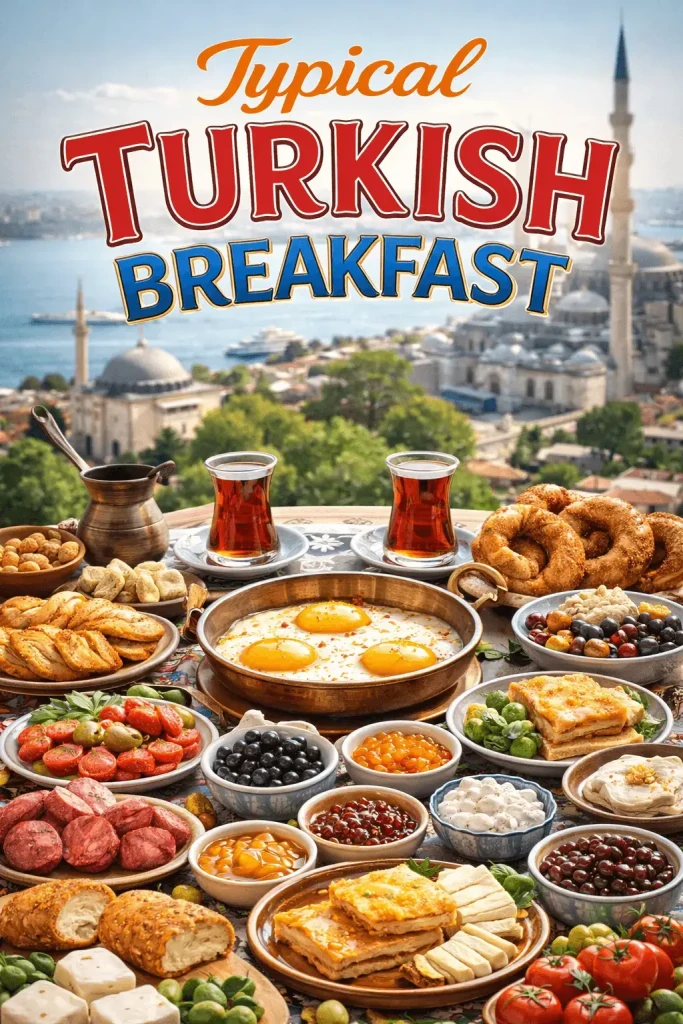
A traditional Turkish breakfast (kahvaltı) is a lavish spread of simit or fresh bread, cheeses of multiple varieties (especially beyaz peynir), olives, sliced tomatoes and cucumbers, menemen (or other eggs), honey with kaymak, assorted jams, and infinite glasses of thick black tea.
Prices are estimates as of early 2026 and may vary. Most up-to-date menus can be checked.
What’s a Typical Turkish Breakfast? Breakfast in Turkey: A 2026 Guide
In Turkey, breakfast is much more than just food — it’s a colorful cultural ritual called kahvaltı (literally, “before coffee”). Turkish sit down to an abundance of colorful fare with fresh ingredients, endless cups of tea, and animated discussions. For travelers, they come to understand that an authentic Turkish breakfast is among the best highlights of any trip.
And wherever you are — a bustling café in Istanbul, a cave hotel in Cappadocia, a beachfront enclave in Antalya — look forward to a bountiful display of the fruit, designed for sharing and dripping with wholesome celebratory vibes.
What is special about Turkish Breakfast?
Where a Western breakfast is typically built around a single item and consumed on the fly, serpme kahvaltı (spread breakfast) is dozens of small plates served family-style. It has savory, fresh, cream and sweet flavors so it’s designed to be sipped slowly.
Non-negotiable table staples that land on nearly every table:
Fresh bread (including simit)
A variety of cheeses
Olives (green and black)
Fresh vegetables (tomatoes, cucumbers)
Eggs (often as menemen)
Honey, jams, kaymak (clotted cream)
Unlimited Turkish tea (çay)
This is a healthy Mediterranean-style meal ideal for sharing.
Essential Foods for a Classical Turkish Breakfast (2026)
Bread –
The Foundation Bread is non-negotiable. The star is simit — a sesame-seed-crusted ring that’s crunchy outside, chewy inside (the so-called Turkish bagel). You will also find warm pide (flatbread), bazlama (thick village bread) or crusty white loaves. Use them to scoop everything else.
Cheeses
Expect 3–6 varieties:
Cottage cheese (e.g., soft, salty white cheese such as feta)
Kaşar (mild, melty yellow cheese)
Otlu peynir (Eastern Turkey herby cheese)
For cheeses with sharper flavors, Tulum or Ezine
Olives, Tomatoes & Cucumbers
The bright green and black olives, luscious tomato wedges and crisp cucumber provide the brightness and contrast. In the summer, you can also get watermelon or other seasonal fruit.
Eggs Turkish-Style
Menemen: Eggs, fried in a pan with tomatoes, green peppers, onions and spices Turkey’s most famous hot dish.
Eggs fried (sahanda yumurta) or with spicy sucuk (Turkish sausage — ask for it without if vegetarian) Some even have boiled eggs, or spinach omelettes.
Sweet Delights
Honey on pure honey atop kaymak (khoormogh — decadent clotted cream): An angelic collision.
Strawberry, Fig, Apricot, Cherry, or Rose Petal Jams (ALL homemade)
At times, tahini, pekmez (grape molasses), or nut spreads.
Extras You’ll Often See
Borek or gozleme (savory pastries)
Yogurt
Fresh fruit
the local flavors (an example is Van-style breakfast which contains a lot of herbs and Javaher-e-dani cheese).
Turkish Tea (Çay) — The Heart of the Meal
No kahvaltı experience would be complete without strong, steaming black tea, which is typically served in tulip-shaped glasses. It flows like water (typically free and limitless at restaurants). In turkey people take their drink without milk (and sometimes a sugar cube inside)
2026 Turkish Breakfast Prices?
Kahvalti: ₺350–600 (~$10–18 USD)/person
Full serpme kahvaltı spread (for 1–2 people): ₺600–1,250 (~$18–38 USD)
Hotel buffets: ₺450–900
If you are in a touristy neighborhood with a Bosphorus view, the prices tend to go up. Still, street simit + tea is the cheapest and most authentic you can get (~₺50–100).
Where to Have Turkish Breakfast As Tourists
Istanbul- Van Kahvaltı Evi (Cihangir or Nişantaşı – known for the Van-style spreads), Çeşme Bazlama Kahvaltı, Cafe Privato or Çakmak Kahvaltı Salonu in Beşiktaş.
Cappadocia: Your cave hotel may serve up a scenic open-air breakfast with a valley view.
Antalya & coastline: Fresh sea sight in the café by the sea.
Hotels & guesthouses, lots with big buffets (so you can sample all the things).
The trick is to order something that features “serpme kahvaltı” on the menu.
Practical Tips for Tourists
The portions are enormous —
You can order one full spread to split between two.
Inform staff if you are vegetarian (sucukh is cooked free) or have special dietary requirements
Tea is bottomless —
don’t be shy about asking for refills (“bir çay daha lütfen”).
Do an early morning visit (8–10 AM) to beat the crowd and catch the freshest goods.
Alignment with daily tours: around all the places near to blue mosque, galata tower or bosphurus where you can smooth out your start of the day.
Why Travelers Love Turkish Breakfast
Its character is not only delicious, but it also beckons us to be social with one another, colorful, and deeply welcoming. You can indulge in fresh, quality products and experience the Turkish hospitality while preparing to hit the road for a long day of visiting Hagia Sophia, fairy chimneys, or ancient ruins.
A meal that is one of the best breakfasts, many travelers call this meal on earth, and a perfect introduction to Turkish culture.
What is a regular Turkish breakfast called?
It’s called kahvaltı (kah-vahl-tuh). No one, the Little Prince says, drinks their caffeine hotshot without a drink before — literally here the ‘before coffee’ (Turks have their strong black tea in the morning and like many Arabs end their breakfast with a Turkish coffee).
Ozbek Dag Evi – Turkish Breakfast Plate Examples
A standard serpme kahvaltı (spread breakfast) contains many small plates: fresh bread or simit, several varieties of cheeses (notably beyaz peynir), green and black olives, tomatoes and cucumber slices, menemen (Turkish style scrambled eggs containing peppers and tomatoes), honey with kaymak (clotted cream), various jams and limitless tubes of çay (Turkish tea). Other places serve borek, sucuk (spicy sausage) or local specialties.
However, we also discovered that Turkish breakfast is vegetarian/vegan-friendly.
Yes — very friendly.
Most things are vegetarian-wise (olives, cheeses, vegetables, honey, jams, menemen and simit, and bread). Skip the meat by asking for “etsiz” (i.e., without meat), cheese/eggs; many cafés offer vegan versions with extra olives, salads, spreads and fried bread. Just note your dietary needs on the order.
Price of Turkish breakfast in Istanbul or Turkey 2026
Easy breakfast plate: ₺350 – 600 (~$10–18 USD)
Full serpme kahvaltı spread (for 1-2 people): ₺600–1,250 (~$18–38 USD)
Hotel breakfast buffet: ₺450–900. Higher in tourist spots that face the (Bosphorus, terraces, Cappadocia) Street simit + tea remains ultra cheap (~₺50–100).
What is menemen?
Menemen is, as probably guessed already, the most favorite nothing written Turkish hot breakfast – scrambled eggs cooked over low heat with fresh tomatoes, green peppers, onions, olive oil and spices. Typically, it is served in the pan and eaten with bread as a dip. You can also add cheese or spicy sucuk if you wish.
People Also Ask (Most Common Questions About Turkish Breakfast)
What, exactly, is simit, and how do you eat it?
Crispy sesame-crusted ring bread (similar to bagel bread but Turkish style). Unlike the latter, you can have it on its own or in shattered pieces with cheese, olives, jam, or honey. One of the lowest-cost and most Turkish breakfast items.
What do they drink with the Turkish breakfasts? Coffee or tea?
Çay — hot herbal tea brought in small tulip glasses and usually free and bottomless as long you stay seated. Turkish coffee comes after breakfast but never with it.
How many people can share one Turkish breakfast?
Yes! A serpme kahvalti comes with a lavish spread. One large spread is enough for all couples or friends, with leftovers. The idea is to portion it out and enjoy it slowly.
Turkish breakfast all day, can it be?
Sure — kahlvati is available at many cafés throughout the morning and well into the afternoon, or even some evenings! Tourist-oriented places usually have all-day breakfast.
What should first-time visitors order?
Order a serpme kahvaltı (full spread) and ask for “menemen” as the hot egg component. And remember to ask for a bir çay daha lütfen (one more tea please)- because the tea is free flow.
Is Turkish breakfast different in each region?
Yes! They are more relaxed versions of the classic iterations in Istanbul, Van-style breakfasts contain a lot more foraged herbs and local cheeses, and the coastal regions (Antalya, Izmir) add well-ftessed or lighter dishes of seafood.
What Is an Average Turkish Breakfast?
A “traditional” Turkish breakfast (kahvaltı) is a table covered with simit or freshly baked bread, several kinds of cheese (most commonly beyaz peynir), olives, sliced tomatoes and cucumbers, menemen or other egg dishes, honey paired with kaymak, all manner of jams, and zillions of glasses of strong black tea.
Whether at a warm Istanbul café, on a cozy terrace of Cappadocia or at your hotel, this colorful meal presents an excellent blend of taste and freshness with leisure. It is cheap, remember why you travel in Turkey, and nutritious.
What is a typical Turkish breakfast called?
It’s called kahvaltı (kah-vahl-tuh). The word literally means “before coffee,” because Turks traditionally enjoy their strong black tea during breakfast and finish with Turkish coffee afterward.
What does a traditional Turkish breakfast include?
A classic serpme kahvaltı (spread breakfast) features many small plates: fresh bread or simit, several cheeses (especially beyaz peynir), green and black olives, sliced tomatoes and cucumbers, menemen (Turkish scrambled eggs with peppers and tomatoes), honey with kaymak (clotted cream), various jams, and endless glasses of çay (Turkish tea). Some places add börek, sucuk (spicy sausage), or regional specialties.
Is Turkish breakfast vegetarian or vegan friendly?
Yes — very friendly.
Most items (olives, cheeses, vegetables, honey, jams, menemen, simit, and bread) are naturally vegetarian. For vegan options, simply ask for “etsiz” (without meat) and skip the cheese/eggs — many cafés offer vegan versions with extra olives, salads, spreads, and fried bread. Just mention your dietary needs when ordering.
How much does Turkish breakfast cost in Istanbul or Turkey in 2026?
- Simple kahvaltı plate: ₺350–600 (~$10–18 USD)
- Full serpme kahvaltı spread (for 1–2 people): ₺600–1,250 (~$18–38 USD)
- Hotel buffet breakfast: ₺450–900. Prices are higher in tourist areas with views (Bosphorus, Cappadocia terraces). Street simit + tea remains super cheap (~₺50–100).
Whether you have it in a cozy Istanbul cafe, at a scenic Cappadocia terrace, or in your hotel, this lively meal is the perfect blend of flavorsome food and relaxation. It’s cheap, healthy, and unforgettable — just what makes traveling in Turkey so special.
If you are planning a personalized travel experience, our customized Turkey tours give you full flexibility to explore the country at your own pace. You can combine destinations like Istanbul, Cappadocia, Ephesus, and Pamukkale into one perfect itinerary.
For travelers with limited time, our
👉 https://turkeyvacationpackages.com/en/2-day-cappadocia-tour-from-istanbul-t10396
is a great option to experience the magical landscapes of Cappadocia quickly and comfortably.
You can also explore another short escape with our
👉 https://turkeyvacationpackages.com/en/2-day-cappadocia-tour-t10784
which offers a well-planned itinerary covering the region’s top attractions.
If you are interested in religious and historical journeys, don’t miss our
👉 https://turkeyvacationpackages.com/en/footsteps-of-st-paul-biblical-turkey-tour-t10879
where you can follow the path of St. Paul and explore significant biblical sites.
For a deeper spiritual experience, our
👉 https://turkeyvacationpackages.com/en/10-day-christian-caravan-turkey-tour-biblical-journey-t10885
offers a complete biblical tour across Turkey with expert guidance and rich historical insights.
Travelers looking for a complete country-wide experience can choose the
which covers major highlights from Istanbul to the Mediterranean coast in one unforgettable journey.
If you prefer a shorter but balanced itinerary, explore our
👉 https://turkeyvacationpackages.com/en/turkey-7-day-tours-tc3365
designed to give you a perfect mix of culture, history, and natural beauty in just one week.
To discover more travel options and explore all available packages, visit our homepage: